How to Track Your Grant Application Status: Complete Guide to Grant Status Tracking in 2026

Topic guide: How to find & apply for grants · All grant resources
In this guide
- How to Track Your Grant Application Status (Quick Answer)
- What Happens After You Submit a Grant Application?
- What Is Grant Application Status Tracking?
- Why Tracking Your Grant Application Status Matters
- Where to Check Grant Status Online
- Step-by-Step Guide: How to Track Your Grant Application Status
- Common Grant Application Status Meanings
- Government vs. Private Grant Tracking Systems
- How Long Does Grant Approval Take?
- Steps to Follow Up After Submitting a Grant Application
- Tips to Improve Grant Approval Chances
- How to Respond When Your Grant Application Is Not Approved
- Best Practices for Managing Multiple Grant Applications
- Tools and Portals for Real-Time Grant Tracking
- When Your Grant Is Approved or Rejected
- Final Thoughts
- Need Help Managing Your Grant Applications?
How to Track Your Grant Application Status (Quick Answer)
To track your grant application status, log in to the portal where you submitted your application, such as Grants.gov, your state funding portal, or a private foundation dashboard, and enter your application ID or reference number. Status updates appear on your dashboard or arrive via email notification. Most portals update within 2–4 weeks after submission.
This guide covers everything you need to know about tracking your grant application status:
- What Is Grant Application Status Tracking?
- Why Tracking Your Grant Application Status Matters
- Where to Check Grant Status Online
- Step-by-Step Guide: How to Track Your Grant Application Status
- Common Grant Application Status Meanings
- Government vs. Private Grant Tracking Systems
- How Long Does Grant Approval Take?
- Tips to Improve Grant Approval Chances
- How to Respond When Your Grant Application Is Not Approved
- Best Practices for Managing Multiple Grant Applications
- Tools and Portals for Real-Time Grant Tracking
- When Your Grant Is Approved or Rejected
- FAQs About Grant Application Status Tracking
What Happens After You Submit a Grant Application?
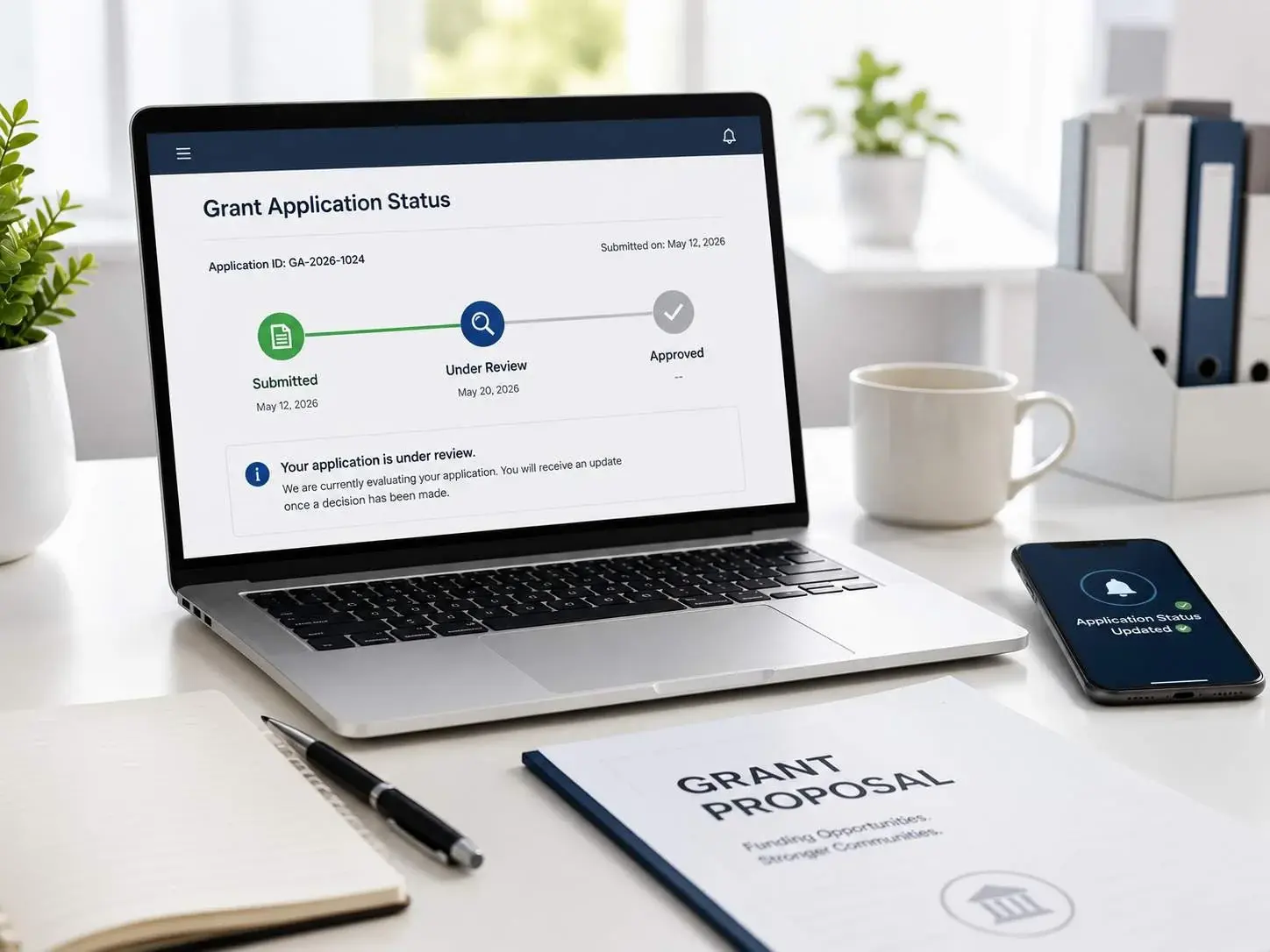
Submitting a grant application takes weeks of research, writing, and document preparation. Once you hit “submit,” though, the waiting begins, and for many applicants, that silence is the hardest part.
Knowing how to track your grant application status isn’t just a convenience. It directly affects whether you respond to agency requests on time, meet appeal deadlines, or catch a technical error before it costs you funding.
In 2026, most federal, state, and private grants use digital portals and automated dashboards. That means you no longer have to call a program officer to find out where your application stands. But navigating these systems, especially for first-time applicants, can still feel overwhelming.
What Is Grant Application Status Tracking?
Grant application status tracking refers to the process of monitoring where your application stands within a funding agency’s review pipeline.
When you submit a grant application, it moves through several internal stages before a final decision is made. These stages include submission, eligibility review, documentation check, panel review, and funding decision. These stages happen inside the agency’s system. Most agencies now make this process visible to applicants through online grant tracking systems and application dashboards.
Your grant application status is essentially a real-time snapshot of where your file is in that pipeline. It tells you whether your application was received, if it’s currently under review, or if a decision has been made.
Key components of grant status tracking:
- Application reference number or case number assigned at submission
- An online portal or dashboard where status updates appear
- Email notification grant status alerts sent by the agency
- Defined status labels (submitted, under review, approved, rejected, etc.)
Understanding the difference between submission, review, and approval stages prevents a lot of unnecessary anxiety, and helps you act quickly when action is needed.
Why Tracking Your Grant Application Status Matters
Most applicants check their grant application status once, then wait. That’s a mistake.
Active grant status tracking helps you:
- Respond to documentation requests quickly
- Know when it’s appropriate to follow up
- Catch submission errors early
- Manage multiple applications more effectively
- Plan your cash flow
Where to Check Grant Status Online
The right place to check grant status online depends entirely on which funding program you applied to.
Federal Grants
- Grants.gov: The central portal for most federal grant programs. After submission, you can check your Grants.gov application status using the tracking number in your confirmation email. Log in, navigate to “My Applications,” and your grant submission status will appear.
- SBA Loans and Grants Portal: For SBA grant status check, visit the SBA’s official site and log in with your application credentials.
- Agency-Specific Portals: Programs like NIH, USDA, and HUD operate their own systems. Always check the specific program page for login instructions.
State and Local Grants
State portals vary widely. Most require a government grant portal login created during the application process. Check your state’s economic development department or department of commerce website for direct portal access.
Private Foundation Grants
Private foundations often use third-party platforms. Your grant application dashboard login credentials were created when you started the application.
Pro Tip: Save your portal login URL, username, and application reference number grant ID in a secure document immediately after submitting. Tracking these down later wastes time when you need to act fast.
Step-by-Step Guide: How to Track Your Grant Application Status
Here’s exactly how to check your grant application status on any major portal:
Step 1: Locate your Confirmation Email
After submitting, you should have received an email with your application ID grant tracking number and a link to the portal.
Step 2: Login to Grant Application Portal
Sign in with the credentials you used during the application process.
Step 3: Navigate to your Applications Dashboard
Navigate to your applications dashboard, look for “My Applications,” “Submitted Applications,” or “Track Application.”
Step 4: Enter your Application ID
Enter your application ID or reference number if prompted. This is your application tracking number grant.
Step 5: Review your Current Grant Review Status
The portal will display your current stage and any pending actions.
Step 6: Check for Messages
Check for agency messages or document requests. Many portals have an internal messaging system separate from email.
Step 7: Note the Last Update Date
This tells you whether the system is current or experiencing a backlog.
Step 8: Set a Calendar Reminder
Set a calendar reminder to check again based on the program’s stated review timeline.
Common Grant Application Status Meanings
Understanding what each status label means helps you decide what to do next.
| Status | What It Means | What You Should Do |
|---|---|---|
| Submitted | Application received by the portal | Verify confirmation email; save your reference number |
| Received | Agency confirmed receipt | No action needed; review begins soon |
| Under Review | Panel or staff is evaluating your file | Wait; do not contact the program officer unless asked |
| Documentation Requested | Agency needs additional materials | Respond immediately, deadlines are often strict |
| Pending Decision | Review complete; awaiting final approval | No action; decision expected per program timeline |
| Approved | Funding awarded | Follow award instructions; sign grant agreement |
| Waitlisted | Qualified but not yet funded | Stay available; funding may open if others decline |
| Rejected | Application not selected | Request feedback; consider resubmission or appeal |
| Funded | Award disbursed or in process | Confirm grant payment status and reporting requirements |
| Closed | Program cycle ended | Watch for next cycle announcements |
What does “Under Review” mean?
The application under review grant meaning simply indicates your file is being evaluated by the program’s review committee. It does not mean you’re being considered for rejection, it means the normal review process is underway.
What does a pending grant application status mean?
Pending typically means your application is in a queue before formal review begins. This is common with high-volume programs. It does not indicate a problem unless the status remains unchanged past the program’s stated review window.
Government vs. Private Grant Tracking Systems
Not all grant tracking systems work the same way. Here’s a quick comparison:
| Feature | Federal / Government | State Programs | Private Foundations |
|---|---|---|---|
| Portal Type | Grants.gov, agency portals | State-specific dashboards | Personal or custom grant portal |
| Update Frequency | Weekly to monthly | Varies widely | Often manual |
| Real-Time Updates | Limited | Sometimes | Rare |
| Email Notifications | Standard | Standard | Varies |
| Phone Support | Yes (help desks) | Yes | Mostly Yes |
Federal grant application tracking tends to be the most standardized. Government grant application status updates follow a defined schedule tied to the funding cycle. Private foundations often have less automated systems, making direct communication more important.
For startup grant application tracking, many accelerator-linked programs use custom portals. Always read the program’s applicant guide for portal-specific instructions.
How Long Does Grant Approval Take?
Grant approval timelines vary significantly by program type. Here’s a realistic overview:
| Grant Type | Typical Review Period |
|---|---|
| Federal Grants (SBIR, HHS, USDA) | 3–6 months |
| State Business Grants | 4–12 weeks |
| SBA Programs | 2–8 weeks |
| Private Foundation Grants | 2–6 months |
| Emergency / Disaster Grants | 1–3 weeks |
| Nonprofit Operating Grants | 3–9 months |
How long does grant approval take also depends on application volume, budget availability, and whether additional documentation was requested.
Grant Approval Process Steps (Simplified):
- Submission and receipt confirmation
- Eligibility and completeness check
- Program staff review
- Peer or panel review (for competitive grants)
- Funding decision
- Award notification and agreement
- Disbursement and reporting setup
Steps to Follow Up After Submitting a Grant Application
Knowing how to follow up on a grant application without seeming pushy is a skill in itself.
Wait for the right window. Most programs publish a review timeline. Follow up only after that window has passed without a grant funding decision update.
Contact the right person. Program officers handle substantive questions. Help desks and the grant application support center handle technical issues and login problems.
Sample follow-up approach:
- Reference your full legal name and organization
- Include your application reference number grant ID
- State the program name and submission date
- Ask one clear question like “Can you confirm the current status of our application?”
- Keep it under 150 words
Many agencies have a dedicated grant help desk contact or funding application help desk listed on the program page. Use these before contacting program staff.
Tips to Improve Grant Approval Chances
Tracking your application is only half the equation. Here’s what actually moves the needle on approvals:
- Match eligibility precisely
- Complete every field
- Provide accurate financial documentation
- Tell a clear story
- Follow formatting instructions exactly
How to Respond When Your Grant Application Is Not Approved
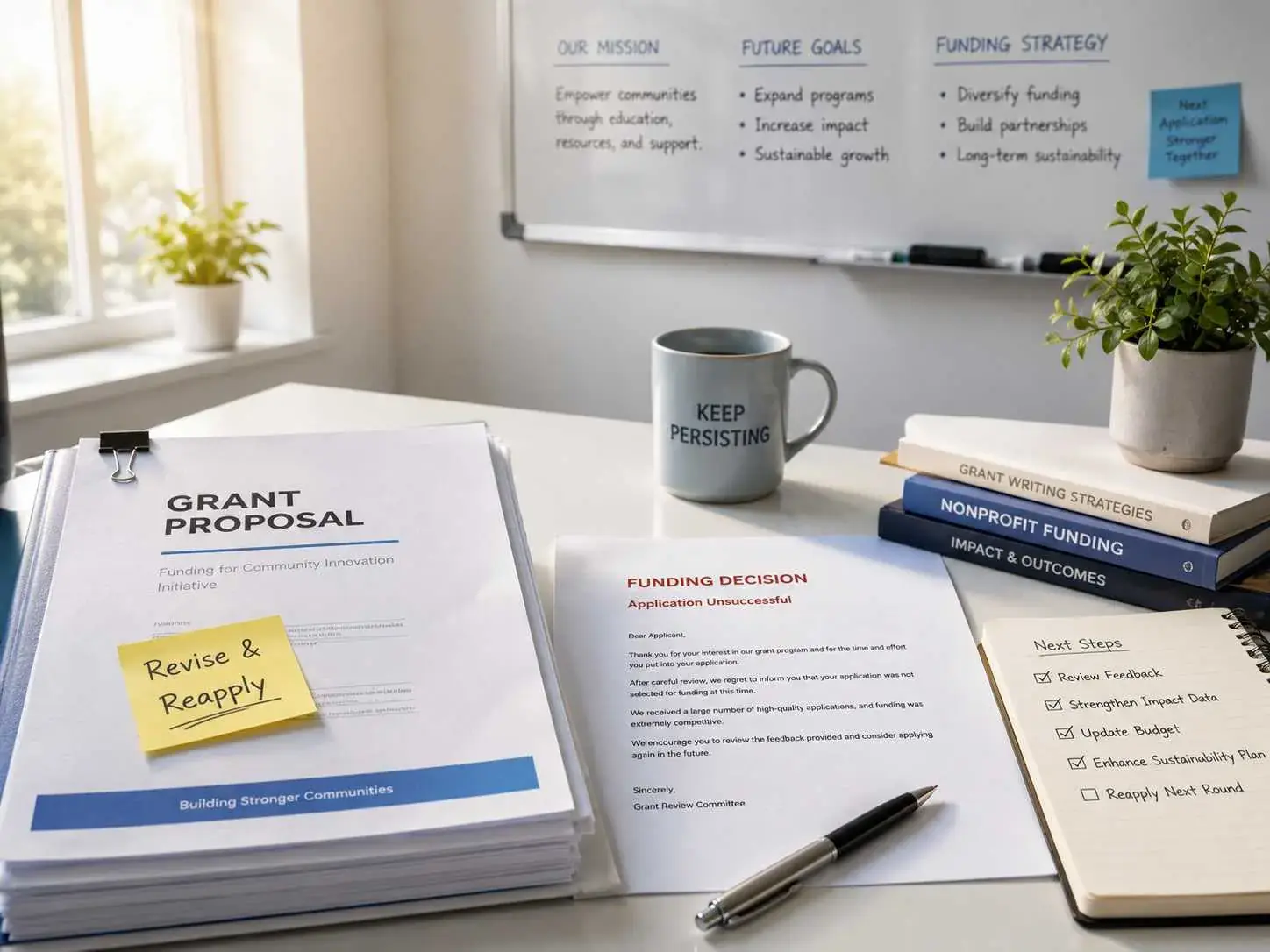
A rejected grant application status is disappointing, but it’s not the end of the road.
Immediate steps:
Step 1: Request written feedback
Many programs offer this. Use it to understand the exact grant application rejection reason.
Step 2: Review the scoring rubric
Compare your application against the stated criteria with fresh eyes.
Step 3: Check your grant appeal status options
Some federal and state programs allow formal appeals within a specific window.
Step 4: Note the resubmission timeline
Grant resubmission status varies, some programs allow it in the next cycle with revisions.
Step 5: Strengthen weak areas
Address every point raised in the feedback before reapplying.
Best Practices for Managing Multiple Grant Applications
Managing several grants simultaneously is where most applicants hit a wall. The administrative burden alone can derail well-prepared organizations.
A basic tracking system should cover:
- Application name and funding agency
- Submission date and deadline
- Application tracking number grant
- Current status and last checked date
- Next action required and by when
- Contact information for the program officer
Grant Management Checklist:
- Confirmation email saved and filed
- Portal login credentials stored securely
- Application reference number grant recorded
- Calendar alerts set for review deadlines
- Document request monitoring enabled
- Follow-up dates pre-scheduled
- Reporting requirements noted for funded grants
Here’s where the process genuinely gets complicated. Every program has
- Different portals
- Different status terminology
- Different timelines
- Different documentation requirements
Organizations managing five or more active applications often find that the tracking and follow-up work is nearly a full-time job on its own.
That’s why many nonprofits, startups, and small businesses partner with grant professionals, not just to write better applications, but to stay organized, catch missed follow-up windows, and navigate the funding process without critical errors. The American Grant Association works with applicants across all stages of this process, from identifying the right opportunities through grant research and grant matching services to ensuring that no status update or document request falls through the cracks.
Tools and Portals for Real-Time Grant Tracking
These platforms are central to how applicants monitor funding application status check progress:
| Tool / Portal | Best For | Access |
|---|---|---|
| Grants.gov | Federal grants | grants.gov/applicants |
| SBA Portal | SBA-linked programs | sba.gov |
| SAM.gov | Federal registration and status | sam.gov |
| Grant Specific Portal | Private foundations | Different for each grant |
| State Portals | State-specific grants | Your state’s commerce/finance site |
A real-time grant tracking system like Grants.gov updates application statuses as they move through review stages. Set up email alerts where available so you receive an email notification grant status update without having to log in manually.
When Your Grant Is Approved or Rejected
If approved:
Your grant approval notification will arrive via email and be reflected in your portal dashboard. Read the award letter carefully, it outlines conditions, reporting schedules, and payment timelines. Grant disbursement status typically moves from “Approved” to “Funded” once you sign the grant agreement and complete any required pre-funding steps.
If rejected:
Review the decision carefully. Request feedback if the program offers it. Check whether a grant appeal status process is available and what the deadline is. Many strong applications are rejected in one cycle and funded in the next after targeted revisions.
Final Thoughts
Grant status tracking is not a passive activity. The applicants who get funded are often the ones who stay organized, respond quickly to requests, and know exactly where their application stands at every stage.
The core habits that make a difference:
- Check your portal regularly, not obsessively, but on a defined schedule
- Respond to documentation requests within 24–48 hours
- Follow up professionally when timelines pass
- Keep records of every interaction with the funding agency
- Learn from every rejection before reapplying
The grant process rewards preparation and persistence. Every status update is information you can use.
Need Help Managing Your Grant Applications?
Staying on top of multiple grant applications, portals, deadlines, and status updates is genuinely demanding work. Missing a single document request or follow-up window can cost your organization real funding.
Professional grant support helps applicants track deadlines accurately, monitor application status across programs, respond to agency requests on time, and submit stronger applications in future cycles.
Contact American Grant Experts today for grant tracking support and funding assistance.
Frequently Asked Questions
How do I check if my grant is approved?
Log in to the portal where you submitted and check your dashboard for a status of “Approved” or “Funded.” You will also receive a grant approval email status notification. If more than two weeks have passed since the stated decision date, contact the grant help desk.
Where can I track my grant application?
The best place to check grant status online is the portal where you originally submitted. For federal grants, that’s Grants.gov or the specific agency’s system. For state programs, use your state’s business or nonprofit grant portal.
What does “under review” mean on a grant application?
It means your application is being evaluated by program staff or a review panel. This is a normal part of the process. Application under review grant meaning does not indicate approval or rejection, it simply means the work is underway.
Why is my application still pending?
A pending grant application status usually means your application is in queue before review begins. High-volume programs, budget cycles, or incomplete documentation can all extend the pending period. If it has been longer than the stated timeline, contact the program’s support center.
How do I find my application ID or tracking number?
Your application ID grant tracking number is in the confirmation email you received at submission. It also appears on your grant application dashboard after you log in. Keep it saved, you’ll need it for any grant status inquiry online.
Can I appeal a rejected grant?
Some programs do allow formal appeals. Check the program guidelines for appeal procedures and deadlines. Grant appeal status options are typically listed in the rejection notice. Not all programs offer this, but many federal and state programs do.
How often are grant status updates posted?
It varies by program. Federal portals like Grants.gov typically update grant program status updates weekly. State and private foundation portals may update less frequently. Setting up email alerts where available is the most reliable way to stay current.
How long does grant approval take on average?
Most competitive grants take 60–180 days from submission to a final funding decision. Emergency grants and smaller state programs can move faster, sometimes within 2–4 weeks. Always check the specific program’s stated review timeline for the most accurate expectation.
Note: This guide is intended for informational purposes only and does not guarantee funding outcomes. Grant approval decisions are made solely by the funding agencies based on their criteria and available budget.
Published by American Grant Association. Program details change — verify eligibility, amounts and deadlines on the funder's official site before applying. See our disclaimer.