


Understanding Military Entrepreneur Challenge (MEC)
The Military Entrepreneur Challenge is a national grant competition administered by the Second Service Foundation that awards cash grants, in-kind support, and business development resources to eligible veterans, military spouses, and Gold Star families pursuing entrepreneurship. Participants gain access to veteran business funding, mentorship, pitch coaching, and a powerful entrepreneurial ecosystem, making MEC one of the most impactful veteran-focused funding programs available today.
This guide covers everything you need to know about the Military Entrepreneur Challenge:
- What Is the Military Entrepreneur Challenge?
- Why the Military Entrepreneur Challenge Matters
- Military Entrepreneur Challenge Funding Opportunities
- Benefits of Participating in MEC
- Eligibility Criteria for MEC Applicants
- Types of Businesses That Qualify
- Grant Funding and Award Structure
- Application Requirements for MEC
- How to Apply for MEC (Step-by-Step Process)
- Best Way to secure MEC Veterans Business Grant
- Tips to Improve Your Chances of Winning
- Common Mistakes to Avoid
- How MEC Grant Funding Can Be Used
- Why Veteran Entrepreneurs Have a Competitive Advantage
- Program Timeline Overview
- Grant Funding vs. Business Loans for Veterans
- Alternative Veteran Business Funding Programs
- Veteran Entrepreneurship Trends in 2026
- Success Stories and Program Impact
- Frequently Asked Questions
From Service to Startup
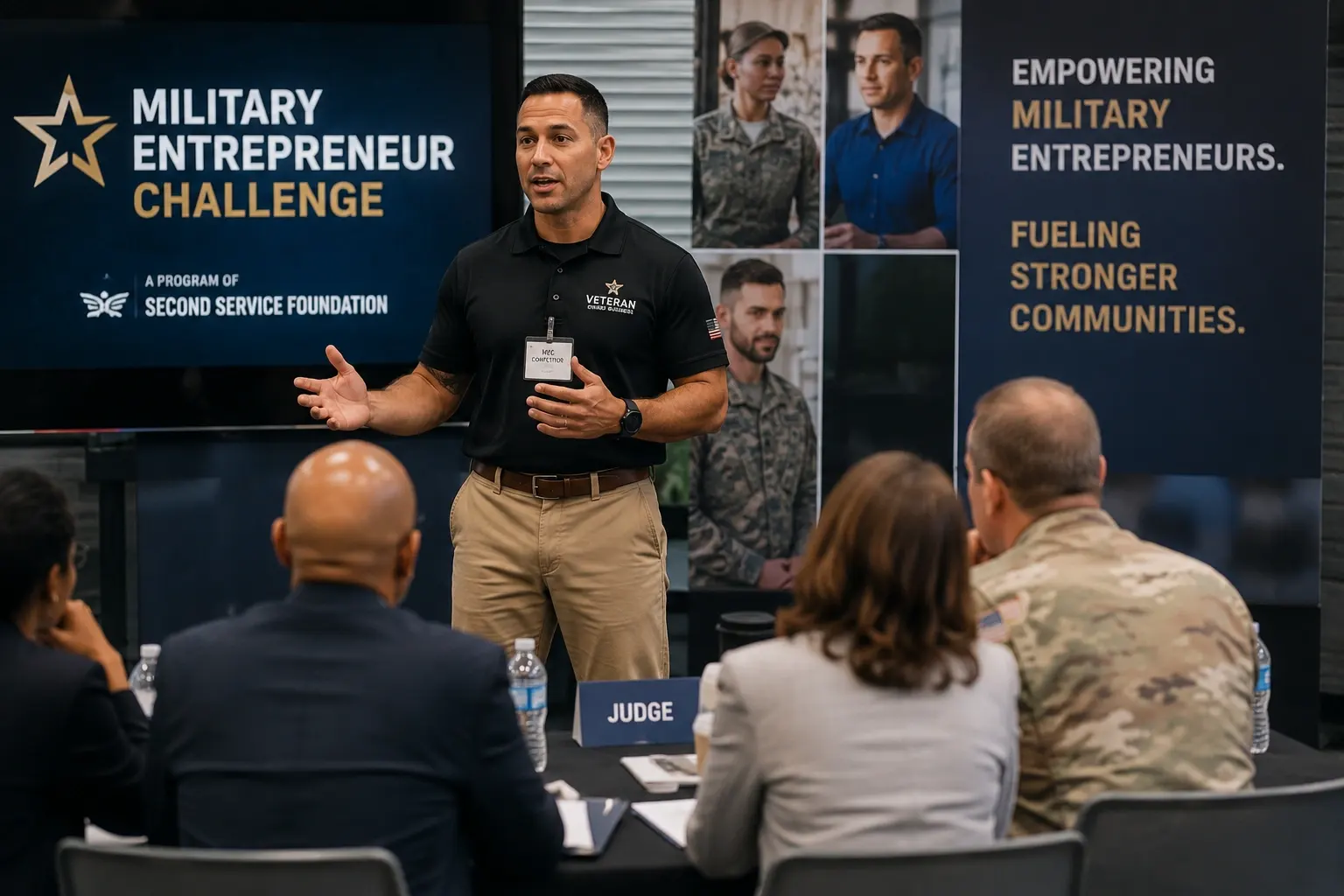
The entrepreneurial transition from military service is one of the most challenging pivots a person can make. Veterans and transitioning service members enter civilian life with extraordinary discipline and leadership, but accessing startup capital, navigating grant eligibility requirements, and building a business from the ground up presents a steep learning curve.
That’s where the Military Entrepreneur Challenge steps in.
Since its founding, the MEC has become a cornerstone of veteran business support, connecting entrepreneurial veterans with the funding, tools, and networks they need to turn business concepts into thriving companies. For military families in business and military-affiliated entrepreneurs still searching for their post-military career opportunities, this program represents both practical support and a genuine shot at the American dream.
What Is the Military Entrepreneur Challenge?
The Military Entrepreneur Challenge™ (MEC) is a pitch competition and grant program created by the Second Service Foundation to advance entrepreneurship for veterans, active-duty service members, military spouse entrepreneurs, and Gold Star families. The program functions as both a startup competition for veterans and a structured pathway to veteran business funding.
Participants compete in regional events before advancing to the national MEC, where finalists pitch before a judging panel of experienced business leaders and investors. Award recipients receive a combination of capital grants, in-kind legal services (through partners like Knight LLP), and connections to programs such as the UTAVBOC Spark for Veterans Incubator.
Program Summary:
|
Feature
|
Details
|
|---|---|
|
Administered By
|
Second Service Foundation
|
|
Competition Type
|
Regional + National pitch competition
|
|
Award Types
|
Cash grants, in-kind support, mentorship
|
|
Eligible Applicants
|
Veterans, military spouses, Gold Star families, transitioning service members
|
|
Business Stage
|
Startups and growth-stage businesses
|
The MEC has also partnered with well-known organizations in the entrepreneurial ecosystem, including programs inspired by ventures like Brewing the American Dream (supported by Sam Adams), which pioneered the idea of connecting entrepreneurs with speed coaching and direct mentorship from industry experts.
Why the Military Entrepreneur Challenge Matters
Veteran economic empowerment goes far beyond individual business success. When entrepreneurial veterans thrive, they create jobs, serve their communities, and build mission-driven businesses that reflect the values of service and sacrifice.
The Military Entrepreneur Challenge program directly addresses three persistent gaps in the veteran startup ecosystem:
- Access to non-dilutive funding: Unlike venture capital, MEC grants are non-repayable funding, meaning veteran founders keep full equity in their businesses.
- Business mentorship and coaching: Beyond cash, the program connects participants with entrepreneur coaching, speed coaching sessions, and private pitch sessions with experienced advisors.
- Community and credibility: Being named a finalist or overall winner signals credibility to future investors, partners, and customers.
For military community entrepreneurs who may lack personal networks in the business world, the veteran networking opportunities MEC provides can be just as valuable as the financial awards themselves.
Military Entrepreneur Challenge Funding Opportunities
The MEC delivers several layers of veteran business funding and support:
- Capital grants for regional grant recipients and national finalists
- Seed capital to help veteran-led startups cover early-stage business expenses
- In-kind legal services to assist with incorporation, IP protection, and contracts
- Business acceleration resources including access to startup accelerator programs and incubation support
- Growth capital opportunities for businesses with demonstrated traction
Specific award amounts vary by competition cycle and are confirmed through Second Service Foundation’s official communications. Awards are designed to provide meaningful startup capital without requiring equity exchange, making them ideal non-dilutive funding for veteran founders who want to retain full control.
Benefits of Participating in the Military Entrepreneur Challenge
Competing in the MEC offers more than prize money. The full range of benefits includes:
- Grant funding and direct business capital
- Business mentorship from experienced entrepreneurs and investors
- Access to a speed coaching session format that delivers rapid, focused feedback
- Veteran networking opportunities at regional events and the Military Influencer Conference
- Entrepreneur coaching through structured programming
- Leadership development workshops and panels
- Business education and entrepreneurial training resources
- Business development resources including legal, financial, and operational guidance
- Connections to the Model Entrepreneur® framework, a proven approach for building scalable businesses
- Recognition as a semi-finalist, finalist, or overall winner, elevating your brand and credibility
Specific award amounts vary by competition cycle and are confirmed through Second Service Foundation’s official communications. Awards are designed to provide meaningful startup capital without requiring equity exchange, making them ideal non-dilutive funding for veteran founders who want to retain full control.
Who Can Apply for the Military Entrepreneur Challenge?
Eligibility Requirements Checklist:
- U.S. military veteran (any branch)
- Active-duty transitioning service members
- Military spouse entrepreneurs
- Gold Star family member or gold star family entrepreneurs
- Service-disabled veteran-owned businesses
- Military-affiliated entrepreneurs with documented military connection
- Businesses in early-stage or growth phase
- Applicants must be legal U.S. residents
The Second Service Foundation’s grant program is intentionally broad to serve the full spectrum of veterans and military families in business. Whether you’re a founder and CEO of a tech startup or a military spouse launching a service business after a military PCS move, MEC is designed to meet you where you are.
Types of Businesses That Qualify
The MEC welcomes diverse business concepts across industries. Qualifying businesses include:
- Veteran-owned companies at any growth stage
- Service-disabled veteran-owned businesses seeking startup funding opportunities
- Innovative startups with scalable business models
- Growth-stage businesses looking for expansion capital
- Mission-driven businesses with clear social or community impact
- Businesses solving real-world business problems with scalable solutions
There is no industry restriction, veteran-led startups in technology, healthcare, food and beverage, manufacturing, professional services, and retail have all competed successfully.
Military Entrepreneur Challenge Grant Funding and Awards
The MEC welcomes diverse business concepts across industries. Qualifying businesses include:
|
Award Level
|
Type of Support
|
Notes
|
|---|---|---|
|
Regional Grant Recipients
|
$1,000 to $15,000 Cash grant + in-kind
|
Varies by regional event
|
|
National Semi-Finalist
|
Pitch coaching + exposure
|
Advances to national MEC
|
|
National Finalist
|
Capital grant + in-kind legal services
|
Judged at national event
|
|
Overall Winner
|
Largest cash grant + full resource package
|
Top honor in competition
|
Military Entrepreneur Challenge Application Requirements
Application Checklist:
- Completed online application form
- Proof of military eligibility (DD-214, military ID, or documentation)
- Business plan or executive summary
- Description of business concept and market opportunity
- Financial projections and startup capital needs
- Pitch deck or business presentation
- Statement of funding need and intended use of grant funds
- Contact and business registration information
Strong application requirements demand more than forms. The most successful applicants treat their submission as both a business proposal and a story, communicating their business vision with clarity, data, and authentic personal narrative.
How to Apply for the Military Entrepreneur Challenge: Step-by-Step
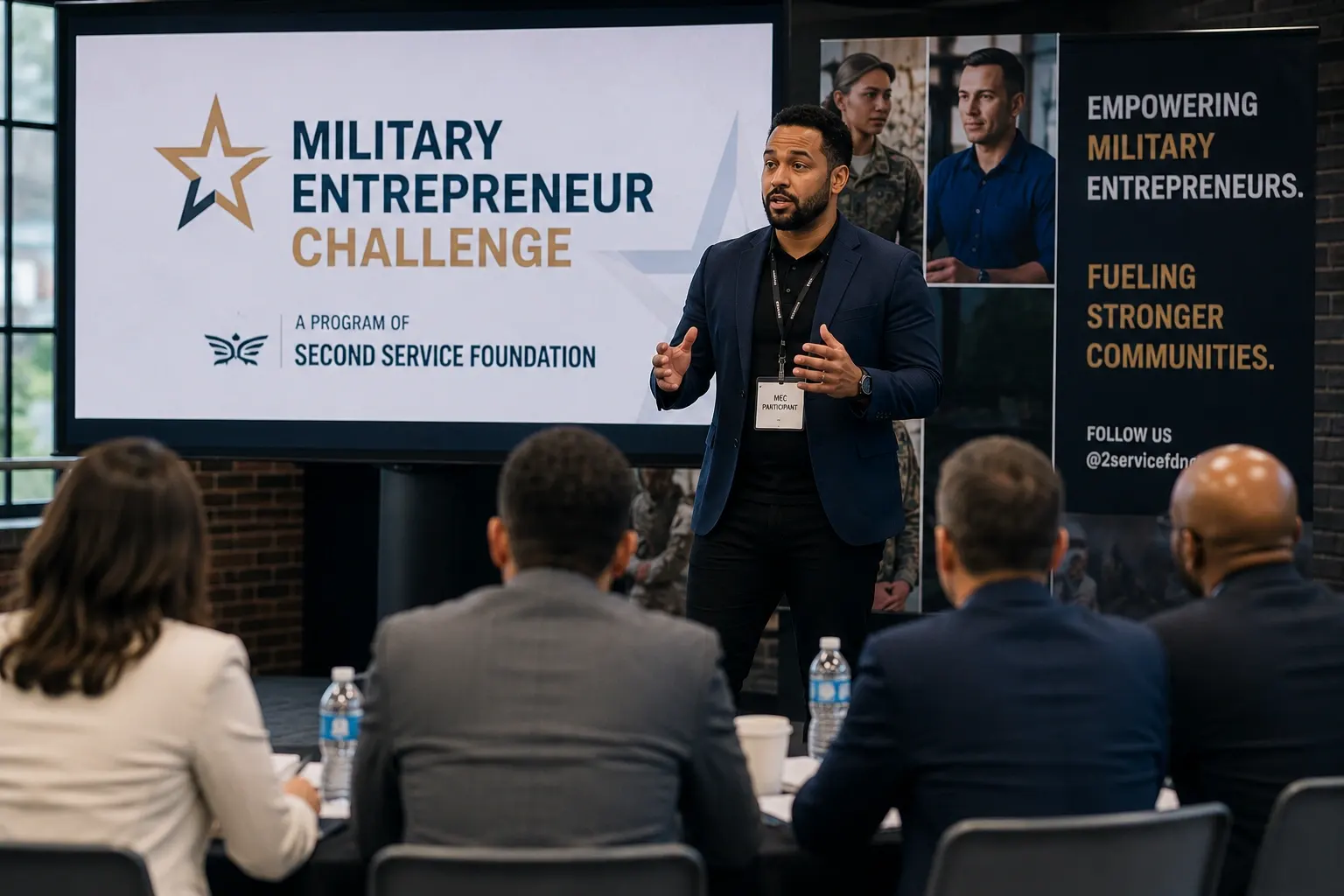
Step 1: Confirm Eligibility
Review the grant eligibility requirements on the Second Service Foundation’s official website. Confirm your military connection and business stage qualify. You may also consider using grant matching services to identify funding opportunities that align with your eligibility and business goals.
Step 2: Develop a Strong Business Plan
Build a business plan that outlines your market opportunity, revenue model, growth strategy, and financial projections. A weak business plan is the most common reason applications fall short.
Step 3: Prepare Your Startup Pitch
Develop a compelling startup pitch that tells your story, demonstrates business scalability, and clearly explains what makes your business worth funding.
Step 4: Complete the Grant Application Process
Fill out the funding application thoroughly. Address every section, incomplete applications rarely advance. Consider using Grant Resource Guidance services to better understand application requirements and strengthen your submission, as incomplete applications rarely advance.
Step 5: Submit Before the Application Deadline
Mark application deadlines in advance. Late submissions are typically disqualified regardless of merit.
Step 6: Prepare for Judging and Presentation
Practice your business presentation repeatedly. Seek feedback from advisors, business owners, and anyone with business acumen.
Step 7: Participate in Pitch Events
Actively participate in regional events, fast-paced coaching sessions, and one-on-one pitch meetings. These interactions build relationships and improve your competitive position.
How American Grant Experts Can Help
Navigating grant opportunities can be challenging, especially when eligibility requirements, deadlines, and funding priorities vary from one program to another. Having access to the right information and resources can help business owners make more informed decisions about where to focus their efforts.
The American Grant Association supports entrepreneurs, including veteran-owned businesses, through services designed to simplify the grant discovery and application preparation process:
Grant Research Services: Identifying relevant grant opportunities based on your business goals, industry, location, and eligibility profile.
Grant Matching Services: Helping connect businesses with funding programs that align with their stage of growth and operational needs.
Grant Resource Guidance Services: Providing educational resources, funding insights, and practical guidance to help businesses better understand grant requirements and expectations.
Grant Community Support: Connecting entrepreneurs with a broader community of business owners, funding resources, and ongoing grant-related updates.
Whether you’re exploring your first funding opportunity or building a long-term funding strategy, access to reliable research, guidance, and support can help you approach the process with greater clarity and confidence.
Understanding the Selection and Judging Process
The MEC’s panel of judges evaluates applications using a multi-criteria selection process designed to identify businesses with the highest potential for long-term success.
Judging Criteria Table:
|
Criteria
|
What Judges Look For
|
|---|---|
|
Business Innovation
|
Unique solution to a real market need
|
|
Market Opportunity
|
Size, demand, and competitive landscape
|
|
Business Scalability
|
Potential for revenue growth and market expansion
|
|
Leadership Potential
|
Founder's business skills, business acumen, and vision
|
|
Financial Viability
|
Realistic projections and funding strategy
|
|
Mission Alignment
|
Connection to veteran values and community impact
|
|
Pitch Quality
|
Clarity, confidence, and storytelling strength
|
What We've Learned From Veteran Business Grant Applications
After working through dozens of veteran business grant applications, including Military Entrepreneur Challenge submissions, certain patterns show up consistently. Not in the program guidelines. Not in any prep checklist. Just in the reality of what actually moves applications forward and what quietly kills them.
Here’s what we’ve found:
Veteran status gets you in the door. It rarely wins the grant
Military service establishes eligibility, but reviewers are evaluating a business, not a service record. The applicants who advance treat their military background as context, not a centerpiece.
Revenue beats passion almost every time
A compelling story matters. But a compelling story backed by paying customers matters far more. Reviewers want to fund momentum, not potential alone.
Clarity is scored as much as intelligence
A reviewer working through fifty applications will favor the one they can understand in thirty seconds over the brilliant one that requires three reads. Simple, direct language wins.
The best applications answer questions before they're asked
Strong applicants don’t wait for judges to wonder about market size, competition, or use of funds. They address it preemptively. If you’re asking yourself “should I include this?”, include it.
Networking matters more than most applicants realize
Many grant competitions, including MEC’s regional events, involve human relationships before the formal judging. Veterans who engage early, at speed coaching sessions, pitch events, and veteran business forums, arrive at judging with context that passive applicants don’t have.
Documentation is the hidden bottleneck
Most application delays and disqualifications come down to missing or misformatted documents, not weak business concepts. Tax records, formation documents, revenue statements, have them ready before you start, not after.
The budget narrative often outweighs the story
Reviewers need to believe the money will be used well. A budget that’s vague, padded, or disconnected from the business plan raises flags. A detailed, justified budget signals operational maturity.
The "too early" problem is more common than veterans expect
Many grants quietly favor businesses that are past the idea stage but haven’t yet scaled. The sweet spot is typically 6–24 months operating, with some revenue, real customers, and a clear growth bottleneck the funding will solve. Pure concepts often struggle; mature businesses often don’t need the grant. If you’re somewhere in between, that’s your window.
Tips to Improve Your Chances of Winning
- Quantify your market
- Show revenue traction
- Make your growth strategy specific
- Craft a compelling personal narrative
- Practice your pitch until it's second nature
- Address risk honestly
- Tailor your funding request
- Seek feedback before submitting
Common Mistakes Applicants Should Avoid
- Submitting a generic business plan not tailored to MEC's mission
- Weak or unrealistic financial projections
- Missing the application deadline
- Failing to demonstrate market demand
- Overlooking the personal narrative and military connection
- Neglecting to explain how funding will drive measurable growth
- Underpreparing for the pitch portion of the selection process
For a deeper look at grant application errors and practical strategies to avoid them, read our guide on Common Mistakes in Grant Applications and How to Prevent Them.
How Military Entrepreneurs Can Use Grant Funding
Veteran business owners have used MEC grants and business capital to fund a wide range of growth initiatives:
- Product development and prototyping
- Technology investments to scale operations
- Hiring employees and building founding teams
- Marketing campaigns to drive customer acquisition
- Market expansion into new regions or channels
- Covering early startup capital expenses like licensing, equipment, and inventory
Veteran business owners have used MEC grants and business capital to fund a wide range of growth initiatives:
Why Veteran Entrepreneurs Have a Competitive Advantage
Military veterans bring something few civilian entrepreneurs can match: proven leadership under pressure. The same qualities that make exceptional service members, discipline, mission focus, team building, and composure under uncertainty, translate directly into business leadership.
Veteran leadership skills like strategic planning, resource management, and rapid decision-making are the same skills that successful business leaders rely on every day. Entrepreneurial veterans also tend to build mission-driven businesses with strong cultures, clear values, and long-term vision, qualities that resonate with customers, partners, and investors alike.
Military Entrepreneur Challenge 2026 Updates
For the 2026 competition cycle, the Second Service Foundation continues expanding its reach through regional events and national programming. Key updates to watch for include:
- Expanded eligibility outreach to military spouse entrepreneurs and Gold Star families
- New partnerships providing additional in-kind support and business incubation
- Sustained collaboration with the Military Influencer Conference to increase overall exposure
- Enhanced mentorship for veterans through the Model Entrepreneur program structure
Always verify current timelines, award amounts, and application requirements directly through the Second Service Foundation’s official channels, as program details are updated each cycle.
Military Entrepreneur Challenge Timeline
|
Phase
|
Activity
|
|---|---|
|
Pre-Application
|
Review eligibility, prepare business plan
|
|
Application Window
|
Submit funding application before deadline
|
|
Regional Events
|
Pitch competition and speed coaching sessions
|
|
Semi-Finalist Selection
|
Advancement to national MEC
|
|
National Competition
|
Finalist presentations before judging panel
|
|
Award Announcement
|
Overall winner and regional grant recipients named
|
Grant Funding vs. Business Loans for Veterans
|
Factor
|
MEC Grant Funding
|
Business Loan
|
|---|---|---|
|
Repayment Required
|
No (non-repayable funding)
|
Yes
|
|
Equity Dilution
|
No
|
No
|
|
Application Complexity
|
Moderate
|
Varies
|
|
Business Stage Fit
|
Early-stage to growth
|
Typically requires revenue
|
|
Additional Support
|
Mentorship, coaching, networking
|
Financial only
|
|
Speed
|
Competitive cycle timing
|
Can be faster
|
Choosing the right funding source is crucial for your business’s long-term success. To better understand how grants differ from other forms of financial assistance, explore our detailed article on Difference Between Grants, Scholarships and Loans.
Alternative Veteran Business Grants and Funding Programs
|
Program
|
Funding Type
|
Eligibility
|
Award Size
|
Complexity
|
|---|---|---|---|---|
|
Military Entrepreneur Challenge
|
Grant + in-kind
|
Veterans, spouses, Gold Star
|
Varies
|
Moderate
|
|
SBA Boots to Business
|
Education + resources
|
Transitioning service members
|
N/A
|
Low
|
|
StreetShares Foundation
|
Small business grants
|
Veteran-owned businesses
|
Up to $15,000
|
Moderate
|
|
Hivers and Strivers
|
Equity investment
|
Veteran-led startups
|
$250K–$1M
|
High
|
|
USDA Rural Business Grants
|
Federal grants
|
Rural veteran businesses
|
Varies
|
High
|
|
State Veteran Business Programs
|
Varies by state
|
State-specific
|
Varies
|
Low–High
|
Exploring veteran funding sources beyond the Military Entrepreneur Challenge strengthens your overall veteran business funding strategy and reduces dependence on any single program. To explore a broader range of funding options, read our comprehensive guide on Types of Grants in the USA.
Veteran Entrepreneurship Trends in 2026
The veteran startup ecosystem continues to grow rapidly. Key trends shaping business opportunities for veterans include:
- Technology and defense-adjacent startups drawing on veterans' operational expertise
- Health and wellness businesses addressing veteran-specific needs
- Franchise ownership as a structured path to business ownership for veterans
- Remote and digital businesses enabling military families to sustain operations through military PCS moves
- Growing interest in global entrepreneurship and international market expansion
- Increased attention from venture capital toward entrepreneurial veterans with proven leadership
Resources for Military Spouses Starting Businesses
Military spouse entrepreneurs face unique challenges, frequent relocations, solo parenting during deployments, and interrupted career paths. Resources designed specifically for this community include:
- Military Entrepreneur Challenge: Eligible as primary applicants
- Rosie Network: Dedicated to military spouse entrepreneurship
- SBA's Office of Veterans Business Development: Includes spouse programming
- Bunker Labs: Connects military-connected entrepreneurs to startup resources
- SCORE Mentors: Free mentorship for veterans available nationwide
Conclusion: Take the Challenge
The Military Entrepreneur Challenge is more than a grant competition, it’s a launchpad for veteran economic empowerment, a community of support, and a statement that military service and entrepreneurial ambition are not just compatible but deeply aligned.
Veterans, military spouses, transitioning service members, and gold star family entrepreneurs all have something powerful to bring to the business world. The MEC exists to help you do it with funding, mentorship, and a platform to be seen.
Prepare thoroughly. Apply boldly. And if you want to give yourself the best possible shot, consider working with professionals who understand both the grant application process and the unique strengths of military-connected business owners.
Need Help Applying for the Military Entrepreneur Challenge?
At American Grant Association, our grant experts help veterans, military spouses, service members, and military-connected entrepreneurs prepare compelling applications, develop winning business plans, strengthen pitch presentations, and maximize their chances of securing grant funding.
Contact American Grant Experts today for professional grant assistance.
Frequently Asked Questions
What is the Military Entrepreneur Challenge?
The Military Entrepreneur Challenge is a national entrepreneurship competition and grant program run by the Second Service Foundation that awards cash grants, in-kind support, and business resources to eligible military-connected entrepreneurs.
Who is eligible to apply?
Veterans, active-duty transitioning service members, military spouse entrepreneurs, Gold Star family members, and service-disabled veteran-owned businesses are all eligible. Applicants must have a documented military connection.
Are military spouses eligible for the MEC?
Yes. Military spouse entrepreneurs are explicitly eligible and actively encouraged to apply. The MEC recognizes the unique entrepreneurial challenges military spouses face, including frequent relocation.
How much funding can participants receive?
Award amounts vary by competition cycle and region. The program provides a combination of cash grants, seed capital, and in-kind support. Check Second Service Foundation’s official website for current award details.
What documents are required to apply?
Applicants typically need proof of military eligibility, a business plan or executive summary, financial projections, a pitch deck, and a completed funding application. Full application requirements are available through the Second Service Foundation.
How are winners selected?
A panel of judges evaluates submissions based on business innovation, market opportunity, leadership potential, financial viability, business scalability, and pitch quality. Finalists present at regional events and the national MEC.
Is the MEC grant funding repayable?
No. Military Entrepreneur Challenge grants are non-repayable funding, meaning recipients do not owe the money back and do not surrender equity in their businesses.
Can a grant writer help improve my application?
Yes. Professional grant writers with expertise in veteran business funding can significantly strengthen your application by improving clarity, aligning your proposal with judging criteria, and ensuring nothing is missing from your submission.
Note: This guide is for informational purposes only. Grant details, eligibility requirements, deadlines, and funding availability are subject to change. Always verify the current program information through official sources before making any business or funding decisions.