


What Are CitizensNYC Community Leaders Grants? (Quick Answer)
CitizensNYC Community Leaders Grants are microgrants of up to $5,000 awarded to resident-led groups, grassroots organizations, and small nonprofits working to improve neighborhood life across New York City’s five boroughs. Community leaders with at least one other volunteer can apply during one of two annual grant cycles. Funded projects span arts and culture, education and youth, environment and climate, health and wellness, economic development, and public safety.
This guide covers everything you need to know about CitizensNYC Community Leaders Grants:
- What Are CitizensNYC Community Leaders Grants?
- Why Community Grants Matter in New York City
- What Types of Projects Receive Funding?
- CitizensNYC Community Leaders Grants Eligibility
- Who Can Apply?
- Funding Amounts and What the Grant Covers
- How to Apply for CitizensNYC Community Leaders Grants
- Application Requirements and Important Deadlines
- Tips to Improve Your Chances of Receiving Funding
- Common Mistakes Applicants Should Avoid
- CitizensNYC Community Leaders Grants vs. Other Community Funding Programs
- Frequently Asked Questions
Why Community Grants Matters
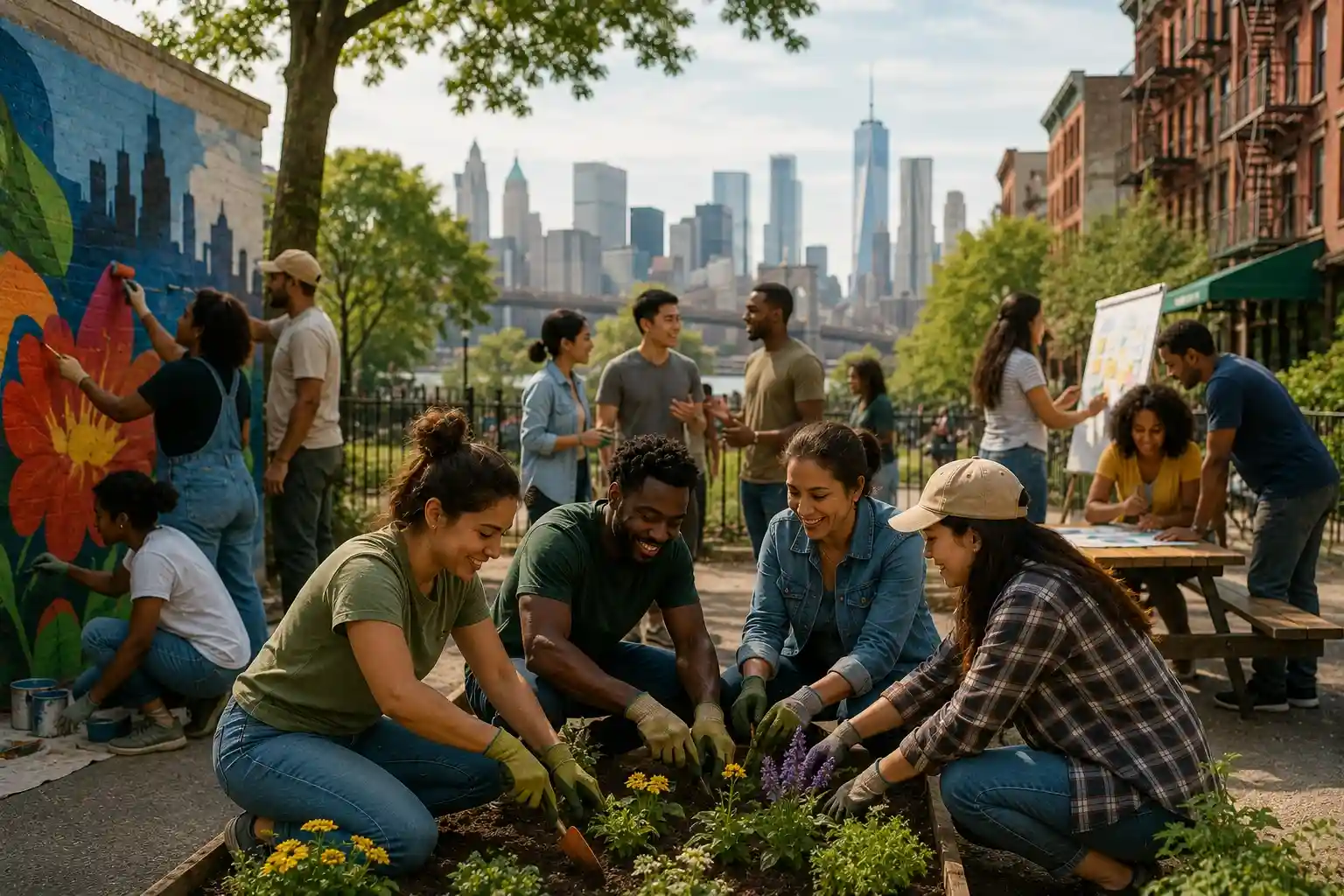
Grassroots leadership is the backbone of New York City communities. Block associations, tenant groups, community gardens, and volunteer collectives often see neighborhood needs long before larger institutions do, but turning a good idea into a funded project is rarely simple. Small, community-based organizations frequently lack the staff time, grant writing experience, or budgeting expertise that competitive applications require.
That’s where CitizensNYC steps in. Since 1975, this microgrant organization has supported everyday New Yorkers who want to strengthen their blocks, their schools, and their neighborhoods. The Community Leaders Grant program reflects a simple belief: people closest to a problem are usually closest to the solution.
What Are CitizensNYC Community Leaders Grants?
CitizensNYC Community Leaders Grants are microgrants, typically up to $5,000, designed to help resident-led groups launch or grow projects that bring neighbors together, strengthen local leadership, and build lasting community partnerships. Unlike many government grant programs, CitizensNYC does not require applicants to hold 501(c)(3) status. Volunteer-led initiatives, small nonprofits, and public schools are all eligible to apply.
The mission behind the CitizensNYC grant program centers on trust in local knowledge. Grantee partners define their own community priorities rather than fitting into a rigid funding template, which is part of why the program funds such a wide range of community projects, from food pantries and community gardens to youth mentorship and public safety initiatives.
Why Community Grants Matter in New York City
Community grants fuel civic engagement in ways large-scale funding often cannot. A microgrant covering supplies for a block clean-up, a youth arts workshop, or a tenant know-your-rights training can be the difference between an idea staying on paper and a project actually happening.
This kind of community funding supports:
- Neighborhood-level civic participation and volunteer leadership
- Community resilience during economic or environmental stress
- Local advocacy led by the residents most affected by an issue
- Trust-building between neighbors, small businesses, and local institutions
- Long-term community empowerment through hands-on project experience
Because these grants are small and accessible, they often reach grassroots organizations that larger foundations overlook, first-time applicants, informal volunteer groups, and community-based organizations without dedicated development staff.
What Types of Projects Receive Funding?
CitizensNYC funds a broad mix of community-driven projects, generally within these focus areas:
|
Focus Area
|
Example Project Types
|
|---|---|
|
Arts and culture
|
Public murals, cultural festivals, storytelling workshops
|
|
Education and youth
|
Mentorship, after-school programs, literacy initiatives
|
|
Environment and climate
|
Community gardens, tree planting, climate resilience projects
|
|
Health and wellness
|
Wellness workshops, food pantries, senior health programs
|
|
Economic development
|
Neighborhood revitalization, local business partnerships
|
|
Public safety
|
Know-your-rights trainings, block watch initiatives
|
Competitive projects tend to share a few traits: a clear connection to a real neighborhood need, meaningful resident involvement, and a realistic plan for using the funding. Projects that are vague, overly ambitious for the budget, or disconnected from community input are harder to score well.
CitizensNYC Community Leaders Grants Eligibility
Eligibility rules can change between grant cycles, so applicants should always confirm current criteria on the official CitizensNYC site. Based on publicly available program information, general eligibility considerations have included:
- The applicant group's project must take place within one of NYC's five boroughs
- At least two individuals must apply together as a group
- Eligible applicants include small nonprofits, volunteer-led initiatives, and public schools, not for-profit businesses
- Formal nonprofit status is not required to apply
- Nonprofit applicants typically must have an annual operating budget below a defined threshold (schools are often exempt)
- Groups cannot be a chapter or affiliate of a larger organization
- Projects cannot promote religious, political, or other ideological agendas
Small business owners looking for similar support should note that CitizensNYC offers a separate Neighborhood Business Grant program, which has its own eligibility rules for small business owners.
Eligibility Checklist
- Our project takes place in one of NYC's five boroughs
- At least two people are applying together
- We are a nonprofit, volunteer-led group, or public school (not a business)
- Our group is not a chapter of a larger organization
- Our project does not promote religious or political ideology
- We have reviewed the current budget threshold on the official CitizensNYC website
Who Can Apply?
Community Leaders Grants are open to a wide range of applicants, including:
- Resident-led groups and block associations
- Grassroots organizations without formal nonprofit status
- Volunteer-led organizations and mutual aid networks
- Community-based organizations and neighborhood associations
- Local nonprofits with an eligible operating budget
- Public schools and school-based programs
Small business owners seeking neighborhood-focused funding should instead look at the Neighborhood Business Grant, which is built for profit-generating businesses rather than volunteer groups.
Eligible Projects
Community Leaders Grants are open to a wide range of applicants, including:
- Neighborhood beautification and community gardens
- Arts and culture programming
- Education initiatives and youth programs
- Environmental projects and climate resilience efforts
- Food security initiatives, including food pantries
- Health and wellness programs
- Public safety and community organizing initiatives
- Neighborhood revitalization efforts
Funding Amounts and What the Grant Covers
CitizensNYC Community Leaders Grants have historically offered funding up to $5,000 per project. This is general program information, and funding levels, priorities, and available amounts can change from cycle to cycle, always confirm current figures on the official CitizensNYC website before budgeting your proposal.
Grant funding is generally intended to cover direct project expenses, such as:
- Supplies and materials needed to run the project
- Space rental or venue costs for community events
- Printing, outreach, or promotional materials
- Honorariums for facilitators, artists, or instructors
- Equipment directly tied to the proposed activity
Ineligible costs typically include expenses unrelated to the specific project, general organizational overhead beyond what’s justified, and expenditures that don’t align with the stated community impact goals. Because funding rules can shift, applicants should treat this as general guidance rather than a confirmed cost list.
How to Apply for CitizensNYC Community Leaders Grants
Step 1: Find the current grant cycle
CitizensNYC typically runs two cycles per year, one in fall and one in spring. Confirm open dates on the official site before starting. Use a grant research service to streamline the process of finding active funding opportunities and important deadlines.
Step 2: Review eligibility carefully
Make sure your group, budget, and project type meet current requirements. A grant matching service can help identify funding opportunities that align with your eligibility and project needs.
Step 3: Prepare your documentation
Gather group information, a project description, and any supporting materials requested in the application. Use grant resource guidance service to better understand documentation requirements and prepare the necessary resources.
Step 4: Develop a strong, specific project
Vague ideas score poorly. Define the need, the activity, and the expected outcome.
Step 5: Write a persuasive proposal
Focus on clarity, community engagement, and measurable quality-of-life impact, the areas CitizensNYC has indicated it scores applications on.
Step 6: Complete the full application
Answer every question thoroughly; incomplete applications are a common reason for rejection.
Step 7: Submit before the application deadline
Set internal deadlines a few days early to avoid last-minute technical issues.
Step 8: Follow the grant review process
Attend an info session or office hours if you have questions, and wait for the decision timeline confirmed by CitizensNYC.
Application Checklist
- Confirmed the current grant cycle and application deadline
- Verified eligibility against current program rules
- Identified at least two applicants for the group
- Drafted a clear project description and community need statement
- Prepared a realistic project budget
- Reviewed CitizensNYC's evaluation criteria
- Proofread the full application
- Submitted before the deadline with confirmation received
How American Grant Experts Can Help
Finding and applying for the right funding opportunity can be challenging, especially for organizations that are balancing day-to-day operations with the demands of grant applications. The American Grant Association helps organizations approach the grant process with better preparation, clearer direction, and a stronger understanding of available opportunities.
Support can include:
- Grant Research Services to identify relevant funding opportunities based on an organization’s mission, programs, location, and eligibility requirements.
- Grant Matching Services to help connect projects with grants that align with their goals, priorities, and funding needs rather than pursuing opportunities that are not a strong fit.
- Grant Resource Guidance Service to provide information, planning support, and practical guidance on navigating grant requirements, application processes, and funding resources.
- Grant Community Support to help organizations access knowledge, encouragement, and resources that make the grant process easier to manage and understand.
- Complete Grant Support to assist with the overall grant journey, including preparation, organization, proposal development support, and reviewing application materials for clarity and completeness.
A successful grant application requires more than completing forms, it requires understanding what funders are looking for, presenting a clear community impact, and ensuring that the proposed project is realistic and well-prepared. Strong preparation, accurate research, and a well-aligned application can help organizations submit more competitive proposals and build a stronger foundation for future funding opportunities.
Application Requirements and Important Deadlines
|
Stage
|
1st Grant Cycle
|
2nd Grant Cycle
|
|---|---|---|
|
Grant Applications Open
|
November 3, 2025
|
May 4, 2026
|
|
Application Deadline
|
February 2, 2026, at 5:00 PM
|
July 27, 2026
|
|
Grant Decisions Announced
|
May 2026
|
September 2026
|
Required Documents Checklist
- Group or organizational information
- Project description and goals
- Budget outline
- Proof of eligibility (as requested by CitizensNYC)
- Any supporting materials specified in the application portal
Grantees should also expect basic reporting obligations after receiving funds, since most community grant programs require some accounting of how money was spent. Confirm specific grant reporting requirements directly with CitizensNYC.
Tips to Improve Your Chances of Receiving Funding
- Demonstrate real community need
- Build partnerships
- Show measurable impact
- Plan for sustainability
- Engage local residents early
- Present a realistic budget
- Strengthen organizational capacity
Expert Tip: Applications that read like they were written by and for the neighborhood, not for a funder, tend to stand out. Specific stories, real names (with permission), and concrete numbers carry more weight than broad claims about “helping the community.”
Common Mistakes Applicants Should Avoid
|
Mistake
|
Why It Hurts Your Application
|
|---|---|
|
Vague project goals
|
Reviewers can't measure impact they can't picture
|
|
Missing documentation
|
Incomplete applications are often disqualified
|
|
Unrealistic or padded budgets
|
Signals weak planning and organizational capacity
|
|
Ignoring eligibility rules
|
Wastes review time and disqualifies strong ideas
|
|
Limited community engagement
|
Undermines the resident-led premise of the program
|
|
Last-minute submissions
|
Leaves no room to fix technical or content issues
|
Avoiding these common mistakes can help applicants submit stronger, more competitive proposals. For additional guidance on improving your application process, explore our guide on Common Mistakes in Grant Applications and How to Prevent Them.
CitizensNYC Community Leaders Grants vs. Other Community Funding Programs
|
Program Type
|
Typical Applicant
|
Funding Focus
|
Application Complexity
|
|---|---|---|---|
|
CitizensNYC Community Leaders Grants
|
Resident-led/grassroots groups
|
Neighborhood-level community projects
|
Low to moderate
|
|
Nonprofits, often with 501(c)(3) status
|
Varies by foundation mission
|
Moderate to high
|
|
|
Registered nonprofits
|
Aligned with corporate priorities
|
Moderate
|
|
|
Nonprofits, municipalities, coalitions
|
Broad public benefit programs
|
High
|
|
|
CBOs, developers, coalitions
|
Physical or economic development
|
High
|
Understanding the differences between community funding options can help organizations choose the right opportunity for their goals and capacity. To explore more funding categories and available opportunities, read our guide on Types of Grants Available in the USA.
Conclusion
CitizensNYC Community Leaders Grants exist because New York City’s neighborhoods are strongest when local leaders have the resources to act on what they already know. Whether your project is a community garden, a youth program, or a block-level safety initiative, a thoughtful, well-documented application gives your idea the best chance of standing out.
Take time to confirm current eligibility, deadlines, and funding details on the official CitizensNYC website, build your proposal around real community input, and don’t hesitate to seek support if grant writing isn’t your team’s strength. Strong applications today help build stronger, more resilient blocks tomorrow.
Need Help Applying for CitizensNYC Community Leaders Grants?
A strong grant application requires more than a great idea. It needs a compelling project narrative, clear community impact, realistic budgeting, strong supporting documents, and careful alignment with eligibility requirements. The American Grant Association helps organizations research grant opportunities, verify eligibility, prepare supporting documentation, and review applications before submission.
Contact American Grant Association today and let experienced grant professionals help you submit a stronger, more competitive application.
Frequently Asked Questions
What are CitizensNYC Community Leaders Grants?
They are microgrants, typically up to $5,000, awarded by CitizensNYC to resident-led groups and small nonprofits for community-strengthening projects across NYC.
Who can apply for a Community Leaders Grant?
Resident-led groups, grassroots organizations, volunteer-led organizations, community-based organizations, local nonprofits, and public schools may apply, subject to current eligibility rules.
Is the CitizensNYC grant program legitimate?
Yes. CitizensNYC (formally Citizens Committee for New York City) has operated as a microgranting organization since 1975.
How much funding is available through the program?
Funding has generally been offered up to $5,000 per project, though amounts can change. Confirm current figures on the official CitizensNYC website.
How long does the grant review process take?
Decisions are generally announced several months after the deadline, though exact timing varies by cycle.
Can nonprofits apply for a Community Leaders Grant?
Yes, nonprofits within eligible budget thresholds can apply, alongside groups that are not formally incorporated.
Do applicants need 501(c)(3) status to apply?
No. Volunteer-led and resident-led groups without formal nonprofit status are generally eligible.
Can resident-led or informal groups apply?
Yes, as long as at least two individuals apply together and other eligibility criteria are met.
What documents are required for the application?
Typical requirements include group information, a project description, and a budget outline. Confirm the full document list on the CitizensNYC application portal.
Is there an application deadline each cycle?
Yes, each of the two annual cycles has its own deadline, which should be confirmed on the official website.
This article reflects publicly available CitizensNYC program information as of publication. Eligibility rules, funding amounts, deadlines, and evaluation criteria can change between grant cycles. Always verify the latest eligibility requirements, deadlines, funding availability, and application instructions on the official CitizensNYC website before applying.